Scan
RU
Russian original
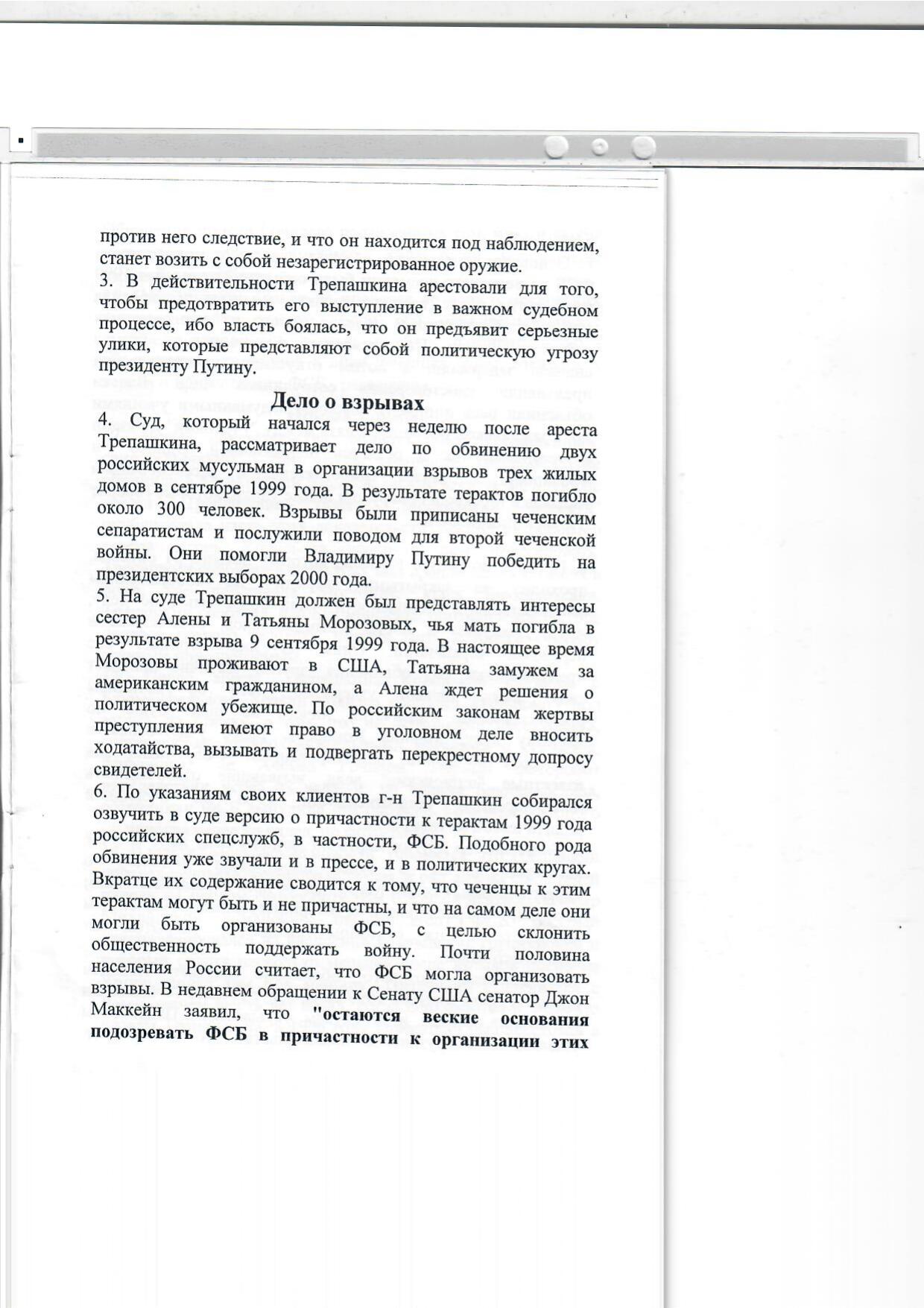
против него следствие, и что он находится под наблюдением, станет возить с собой незарегистрированное оружие.
3. В действительности Трепашкина арестовали для того, чтобы предотвратить его выступление в важном судебном процессе, ибо власть боялась, что он предъявит серьезные улики, которые представляют собой политическую угрозу президенту Путину.
Дело о взрывах
- Суд, который начался через неделю после ареста Трепашкина, рассматривает дело по обвинению двух российских мусульман в организации взрывов трех жилых домов в сентябре 1999 года. В результате терактов погибло около 300 человек. Взрывы были приписаны чеченским сепаратистам и послужили поводом для второй чеченской войны. Они помогли Владимиру Путину победить на президентских выборах 2000 года.
- На суде Трепашкин должен был представлять интересы сестер Алены и Татьяны Морозовых, чья мать погибла в результате взрыва 9 сентября 1999 года. В настоящее время Морозовы проживают в США, Татьяна замужем за американским гражданином, а Алена ждет решения о политическом убежище. По российским законам жертвы преступления имеют право в уголовном деле вносить ходатайства, вызывать и подвергать перекрестному допросу свидетелей.
- По указаниям своих клиентов г-н Трепашкин собирался озвучить в суде версию о причастности к терактам 1999 года российских спецслужб, в частности, ФСБ. Подобного рода обвинения уже звучали и в прессе, и в политических кругах. Вкратце их содержание сводится к тому, что чеченцы к этим терактам могут быть и не причастны, и что на самом деле они могли быть организованы ФСБ, с целью склонить общественность поддержать войну. Почти половина населения России считает, что ФСБ могла организовать взрывы. В недавнем обращении к Сенату США сенатор Джон Маккейн заявил, что "остаются веские основания подозревать ФСБ в причастности к организации этих
EN
English translation
Investigation and Arrest
- Investigation against him, and that he is under surveillance, would carry unregistered weapons with him.
- In reality, Trepashkin was arrested in order to prevent his appearance in an important trial, because the authorities feared that he would present serious evidence that would pose a political threat to President Putin.
The Bombing Case
- The trial, which began a week after Trepashkin's arrest, is considering the case accusing two Russian Muslims of organizing the bombings of three residential buildings in September 1999. As a result of the terrorist attacks, about 300 people died. The explosions were attributed to Chechen separatists and served as a pretext for the Second Chechen War. They helped Vladimir Putin win the 2000 presidential election.
- At the trial, Trepashkin was supposed to represent the interests of sisters Alena and Tatyana Morozova, whose mother died as a result of the explosion on September 9, 1999. Currently, the Morozovs live in the USA; Tatyana is married to an American citizen, and Alena is awaiting a decision on political asylum. According to Russian laws, victims of a crime have the right in a criminal case to file motions, summon, and cross-examine witnesses.
- Following the instructions of his clients, Mr. Trepashkin intended to voice in court the version of the involvement of the Russian special services, in particular the FSB, in the 1999 terrorist attacks. Similar accusations have already been voiced both in the press and in political circles. Briefly, their content boils down to the fact that the Chechens may not be involved in these terrorist attacks, and that in fact they could have been organized by the FSB, with the aim of persuading the public to support the war. Almost half of the Russian population believes that the FSB could have organized the explosions. In a recent address to the US Senate, Senator John McCain stated that "there remain compelling grounds to suspect the FSB of involvement in the organization of these