4
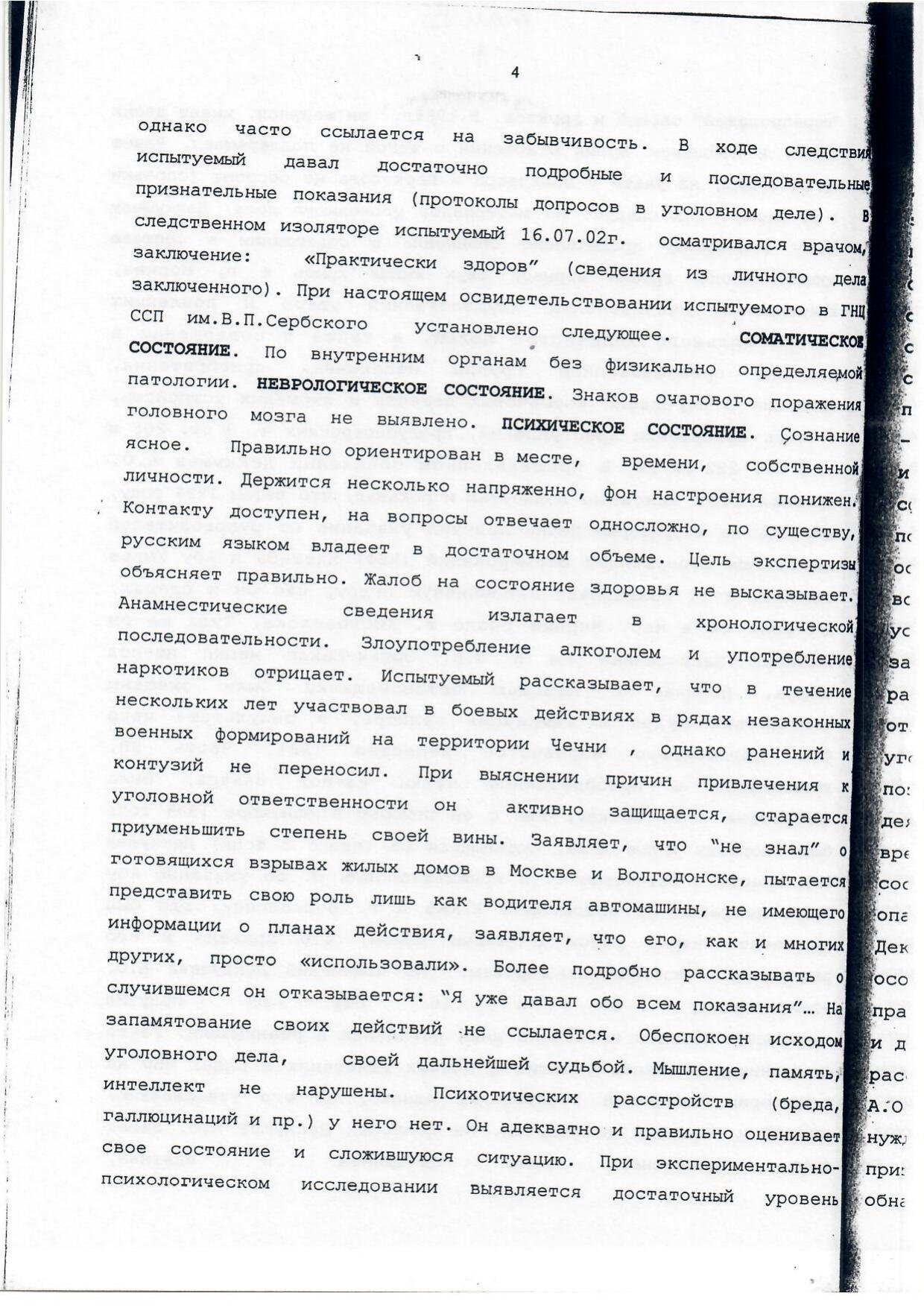
однако часто ссылается на забывчивость. В ходе следствия испытуемый давал достаточно подробные и последовательные признательные показания (протоколы допросов в уголовном деле). В следственном изоляторе испытуемый 16.07.02г. осматривался врачом, заключение: «Практически здоров» (сведения из личного дела заключенного). При настоящем освидетельствовании испытуемого в ГНЦ ССП им. В.П. Сербского установлено следующее. СОМАТИЧЕСКОЕ СОСТОЯНИЕ. По внутренним органам без физикально определяемой патологии. НЕВРОЛОГИЧЕСКОЕ СОСТОЯНИЕ. Знаков очагового поражения головного мозга не выявлено. ПСИХИЧЕСКОЕ СОСТОЯНИЕ. Сознание ясное. Правильно ориентирован в месте, времени, собственной личности. Держится несколько напряженно, фон настроения понижен. Контакту доступен, на вопросы отвечает односложно, по существу, русским языком владеет в достаточном объеме. Цель экспертизы объясняет правильно. Жалоб на состояние здоровья не высказывает. Анамнестические сведения излагает в хронологической последовательности. Злоупотребление алкоголем и употребление наркотиков отрицает. Испытуемый рассказывает, что в течение нескольких лет участвовал в боевых действиях в рядах незаконных военных формирований на территории Чечни, однако ранений и контузий не переносил. При выяснении причин привлечения к уголовной ответственности он активно защищается, старается приуменьшить степень своей вины. Заявляет, что "не знал" о готовящихся взрывах жилых домов в Москве и Волгодонске, пытается представить свою роль лишь как водителя автомашины, не имеющего информации о планах действия, заявляет, что его, как и многих других, просто «использовали». Более подробно рассказывать о случившемся он отказывается: "Я уже давал обо всем показания"... На запамятование своих действий не ссылается. Обеспокоен исходом уголовного дела, своей дальнейшей судьбой. Мышление, память, интеллект не нарушены. Психотических расстройств (бреда, галлюцинаций и пр.) у него нет. Он адекватно и правильно оценивает свое состояние и сложившуюся ситуацию. При экспериментально-психологическом исследовании выявляется достаточный уровень
Examination Findings
However, he often refers to forgetfulness. During the investigation, the subject gave fairly detailed and consistent confessions (interrogation protocols in the criminal case). In the pre-trial detention center, the subject was examined by a doctor on 16.07.02; conclusion: "Practically healthy" (information from the prisoner's personal file). During the current examination of the subject at the Serbsky State Scientific Center for Social and Forensic Psychiatry, the following was established.
Somatic State
- Internal organs show no physically detectable pathology.
Neurological State
- No signs of focal brain damage were identified.
Mental State
- Consciousness is clear.
- Correctly oriented in place, time, and self-identity.
- Behaves somewhat tensely, mood background is lowered.
- Accessible for contact, answers questions in monosyllables, to the point, has sufficient command of the Russian language.
- Explains the purpose of the expertise correctly.
- Does not express complaints about his state of health.
- Presents anamnesis information in chronological sequence.
- Denies alcohol abuse and drug use.
- The subject says that for several years he participated in combat operations in the ranks of illegal armed formations on the territory of Chechnya, however, he did not suffer wounds or concussions.
- When clarifying the reasons for being held criminally liable, he actively defends himself, trying to minimize the degree of his guilt.
- He states that he "did not know" about the planned explosions of residential buildings in Moscow and Volgodonsk, tries to present his role only as a car driver who does not have information about the action plans, states that he, like many others, was simply "used".
- He refuses to talk about what happened in more detail: "I have already given testimony about everything"...
- He does not refer to forgetting his actions.
- He is concerned about the outcome of the criminal case and his future fate.
- Thinking, memory, and intellect are not impaired.
- He has no psychotic disorders (delusions, hallucinations, etc.).
- He adequately and correctly assesses his state and the current situation.
During the experimental-psychological study, a sufficient level of...