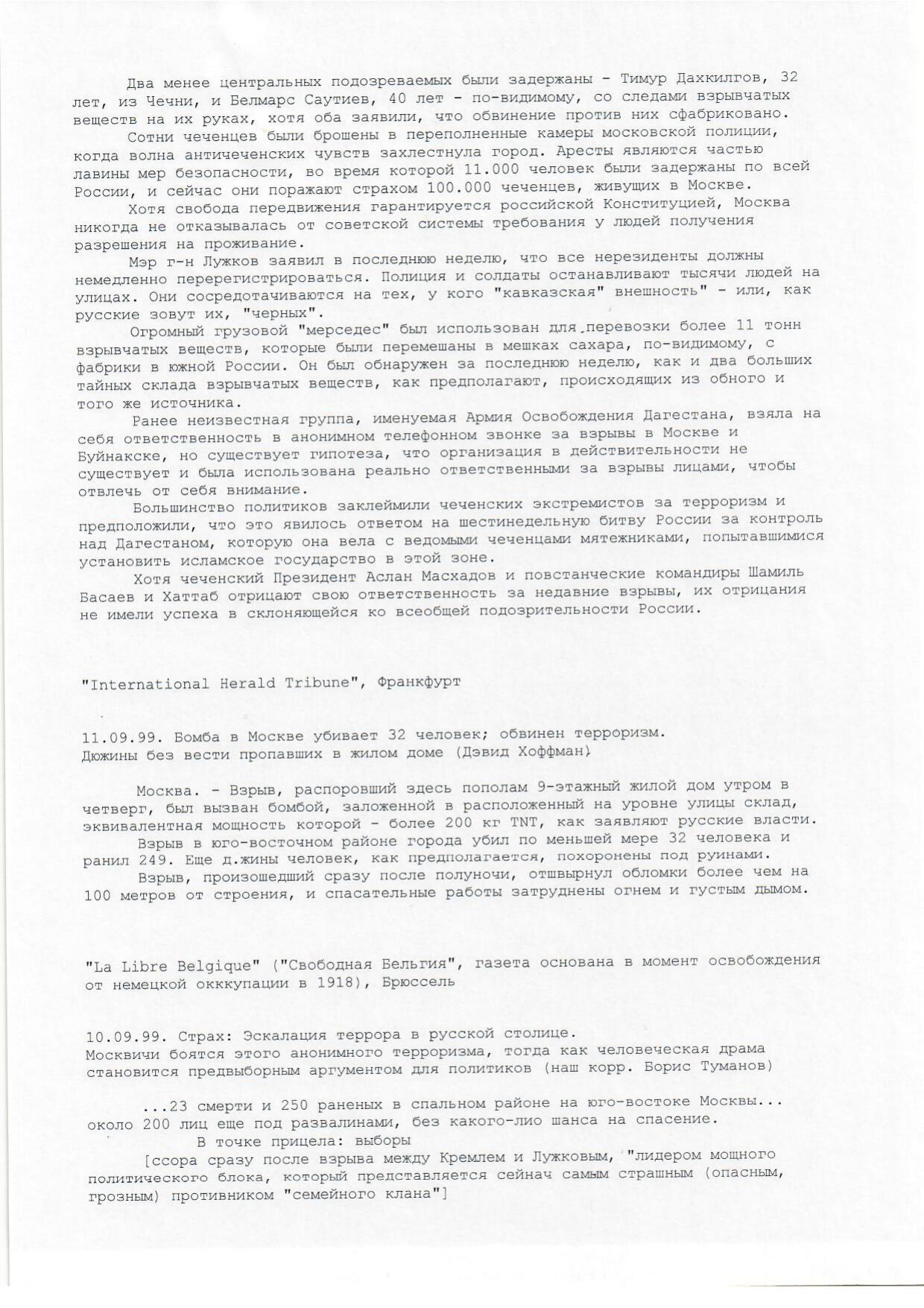
Два менее центральных подозреваемых были задержаны - Тимур Дахкилгов, 32 лет, из Чечни, и Белмарс Саутиев, 40 лет - по-видимому, со следами взрывчатых веществ на их руках, хотя оба заявили, что обвинение против них сфабриковано.
Сотни чеченцев были брошены в переполненные камеры московской полиции, когда волна античеченских чувств захлестнула город. Аресты являются частью лавины мер безопасности, во время которой 11.000 человек были задержаны по всей России, и сейчас они поражают страхом 100.000 чеченцев, живущих в Москве.
Хотя свобода передвижения гарантируется российской Конституцией, Москва никогда не отказывалась от советской системы требования у людей получения разрешения на проживание.
Мэр г-н Лужков заявил в последнюю неделю, что все нерезиденты должны немедленно перерегистрироваться. Полиция и солдаты останавливают тысячи людей на улицах. Они сосредотачиваются на тех, у кого "кавказская" внешность" - или, как русские зовут их, "черных".
Огромный грузовой "мерседес" был использован для перевозки более 11 тонн взрывчатых веществ, которые были перемешаны в мешках сахара, по-видимому, с фабрики в южной России. Он был обнаружен за последнюю неделю, как и два больших тайных склада взрывчатых веществ, как предполагают, происходящих из одного и того же источника.
Ранее неизвестная группа, именуемая Армия Освобождения Дагестана, взяла на себя ответственность в анонимном телефонном звонке за взрывы в Москве и Буйнакске, но существует гипотеза, что организация в действительности не существует и была использована реально ответственными за взрывы лицами, чтобы отвлечь от себя внимание.
Большинство политиков заклеймили чеченских экстремистов за терроризм и предположили, что это явилось ответом на шестинедельную битву России за контроль над Дагестаном, которую она вела с ведомыми чеченцами мятежниками, попытавшимися установить исламское государство в этой зоне.
Хотя чеченский Президент Аслан Масхадов и повстанческие командиры Шамиль Басаев и Хаттаб отрицают свою ответственность за недавние взрывы, их отрицания не имели успеха в склоняющейся ко всеобщей подозрительности России.
"International Herald Tribune", Франкфурт
11.09.99. Бомба в Москве убивает 32 человек; обвинен терроризм.
Дюжины без вести пропавших в жилом доме (Дэвид Хоффман)
Москва. - Взрыв, распоровший здесь пополам 9-этажный жилой дом утром в четверг, был вызван бомбой, заложенной в расположенный на уровне улицы склад, эквивалентная мощность которой - более 200 кг TNT, как заявляют русские власти.
Взрыв в юго-восточном районе города убил по меньшей мере 32 человека и ранил 249. Еще д.жины человек, как предполагается, похоронены под руинами.
Взрыв, произошедший сразу после полуночи, отшвырнул обломки более чем на 100 метров от строения, и спасательные работы затруднены огнем и густым дымом.
"La Libre Belgique" ("Свободная Бельгия", газета основана в момент освобождения от немецкой окккупации в 1918), Брюссель
10.09.99. Страх: Эскалация террора в русской столице.
Москвичи боятся этого анонимного терроризма, тогда как человеческая драма становится предвыборным аргументом для политиков (наш корр. Борис Туманов)
...23 смерти и 250 раненых в спальном районе на юго-востоке Москвы... около 200 лиц еще под развалинами, без какого-либо шанса на спасение.
В точке прицела: выборы
[ссора сразу после взрыва между Кремлем и Лужковым, "лидером мощного политического блока, который представляется сейчас самым страшным (опасным, грозным) противником "семейного клана"]
Terror in Moscow: Bombing and Security Crackdown
Detentions and Security Measures
- Two less central suspects were detained:
- Timur Dakhkilgov, 32, from Chechnya.
- Belmars Sautiev, 40.
- Both suspects reportedly had traces of explosives on their hands, though they claimed the charges against them were fabricated.
- Hundreds of Chechens were detained in overcrowded Moscow police cells amid rising anti-Chechen sentiment.
- These arrests are part of a broader wave of security measures across Russia, resulting in 11,000 detentions, which is causing fear among the 100,000 Chechens living in Moscow.
Movement Restrictions
- Although the Russian Constitution guarantees freedom of movement, Moscow has maintained the Soviet system requirement for obtaining residence permits.
- Mayor Mr. Luzhkov recently stated that all non-residents must immediately re-register.
- Police and soldiers are stopping thousands of people on the streets, focusing on those with a "Caucasian" appearance, or what Russians call "blacks."
Explosives Discovery
- A large "Mercedes" truck was used to transport over 11 tons of explosives, which were mixed into bags of sugar, apparently sourced from a factory in southern Russia.
- Over the past week, two large secret caches of explosives were also discovered, presumed to originate from the same source.
Responsibility and Political Context
- A previously unknown group, the Dagestan Liberation Army, claimed responsibility for the bombings in Moscow and Buynaksk via an anonymous phone call.
- There is a hypothesis that this organization may not actually exist and was used by the true perpetrators to divert attention.
- Most politicians labeled Chechen extremists as terrorists, suggesting the bombings were a reaction to Russia's six-week battle for control over Dagestan. This conflict involved Chechen-led rebels attempting to establish an Islamic state in the region.
- Despite denials of responsibility from Chechen President Aslan Maskhadov and rebel commanders Shamil Basayev and Khattab, these denials have been unsuccessful in a Russia leaning toward universal suspicion.
Source Notes:
* "International Herald Tribune", Frankfurt (11.09.99. Bomb in Moscow kills 32 people; terrorism blamed. Dozens missing in an apartment building (David Hoffman))
* "La Libre Belgique" ("Free Belgium", newspaper founded at the time of liberation from German occupation in 1918), Brussels (10.09.99. Fear: Escalation of terror in the Russian capital. Muscovites fear this anonymous terrorism, while the human drama becomes a campaign argument for politicians (our corr. Boris Tumanov))
Moscow Bombing Incident
- An explosion that split a 9-story apartment building in half on Thursday morning was caused by a bomb planted in a street-level warehouse.
- Russian authorities stated the bomb had the equivalent power of more than 200 kg of TNT.
- The explosion in the southeastern district of the city killed at least 32 people and injured 249.
- Dozens more people are presumed buried under the ruins.
- The blast, which occurred just after midnight, threw debris over 100 meters from the structure, and rescue efforts are hindered by fire and thick smoke.
Political Fallout
- The incident has led to a quarrel between the Kremlin and Luzhkov, described as "the leader of a powerful political bloc, who is now presented as the most fearsome (dangerous, formidable) opponent of the 'family clan'."